
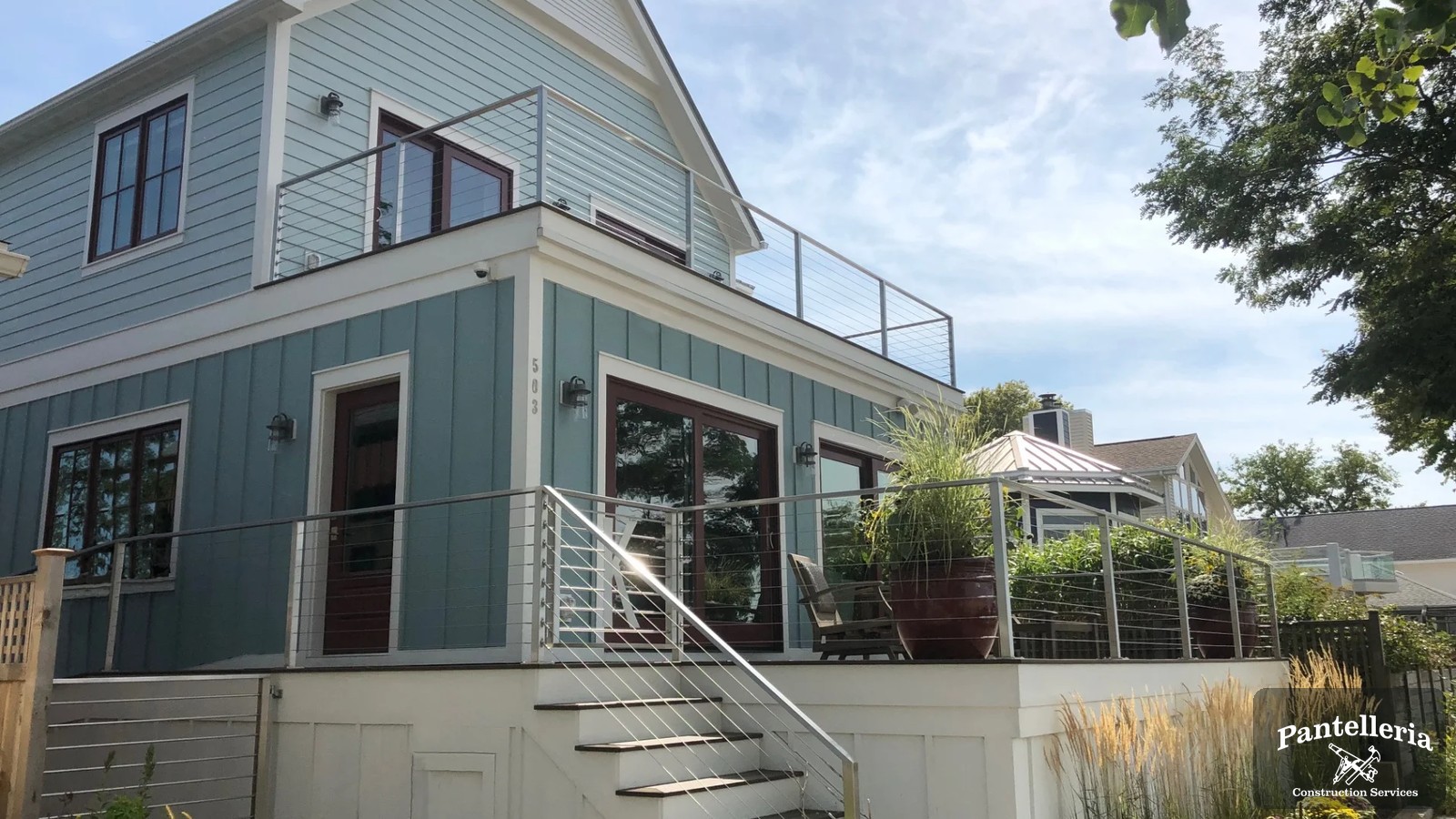
Adding On vs. Moving On: When a Home Addition Beats Buying in the St. Joseph Market
You like where you live. The kids are in the district you wanted, the drive to the bluff takes four minutes, and you know which neighbor plows first after a lake-effect night. What you don't like is the one bathroom upstairs, the kitchen you have to leave to talk to anyone, and the fact that there is nowhere to put your parents when they visit in July.
So you start looking. And in St. Joseph, Stevensville and the streets around them, looking gets discouraging fast. Inventory is thin, the houses that do come up in the neighborhoods people actually want tend to move quickly, and the ones that stay on the market usually stay for a reason. That's the moment homeowners call us and ask the honest question: is it smarter to add on, or to move on?
Here's how Mike and his team think it through.
Moving Costs More Than the Sticker on the New House
When people compare the two options, they usually put the full cost of an addition next to the price difference between their house and the next one. That's not the real comparison.
Selling means agent commission, closing costs, and whatever the inspection turns up on your current home before anyone hands you a check. Buying means closing costs again, moving, and — almost always — a list of things you'd change about the house you just bought. Most people don't buy a home and love every finish in it. They buy it and start a remodel budget in their head on the drive home.
An addition skips all of that. Every dollar goes into the house you already chose, on the lot you already chose, in the school district you already chose. Nothing gets spent on the transaction itself.
In This Market, You're Really Buying the Lot
Location is the one thing you cannot renovate. A short walk to Silver Beach, a mature tree canopy, a corner where the kids can ride bikes, a view of the water from the second floor — none of that is something we can build for you somewhere else. Berrien County has plenty of land. It has far less land in the specific blocks people want to live on.
If the reason you're looking is square footage — a primary suite, a real kitchen, a mudroom that handles beach sand and snow boots, a bedroom over the garage — that's a build problem, and build problems have build answers. Adding on lets you buy the space without giving up the address.
The same logic runs even stronger on the lake side of the county. In New Buffalo, Bridgman, Sawyer and Lakeside, the cottage that's been in the family for thirty years usually sits on a lot nobody would sell you today. Expanding that cottage is almost always the better move than trying to replace it.
When We Tell People to Move Instead
We don't take every addition that comes our way, and we'll say so during the walkthrough. Moving is the better call when:
- The lot won't allow it. Setbacks, easements, lot coverage limits and shoreline rules in Berrien County townships can cap what you're permitted to build. If the addition you want doesn't fit inside the envelope, it doesn't matter how good the plan is.
- The septic or well can't carry more house. Adding bedrooms can push a rural system past what it was sized and permitted for, and that's a real expense to solve before you frame anything.
- The existing structure is fighting you. Some foundations, roof lines and floor systems make an addition cost far more than the space is worth. We'd rather tell you that on day one than discover it after demo.
- You don't actually like the house. An addition fixes the size of a home. It doesn't fix a layout you've never gotten along with, or a location you've quietly outgrown. Be honest with yourself about which problem you have.
How We Answer the Question for Your House
It starts with a walkthrough. Mike comes out, looks at the foundation and the framing, checks whether the electrical panel, furnace and water heater have room for more house, and looks at the roof line to see where an addition can tie in without looking bolted on. Then we look at the lot itself — where the setbacks fall, what the township will allow, where utilities run.
If it pencils, our in-house design team can draw the addition for you, the same as we do for homes and remodels under 3,500 square feet. If you already have an architect or a designer, we'll work from their plans instead. Either way, we pull the permits and deal with the county and township so you never sit at a counter.
You get a detailed estimate before ground breaks, not a number scribbled on a business card. Every trade — excavation, concrete, framing, roofing, mechanicals, drywall, cabinetry, finish work — is scheduled and coordinated by us. One point of contact, start to finish. And because most families stay in the house while an addition goes up, we plan the dust control, the staged schedule and the daily cleanup as part of the job, not as an afterthought.
The Right Answer Depends on Your House, Not on the Market
Some homes in St. Joseph should be added onto. Some should be sold. The only way to know which one you're standing in is to have a builder walk it with you and tell you straight.
Pantelleria Construction has been building and remodeling in Southwest Michigan for more than twenty years — family owned, licensed and insured as a Michigan Residential Builder, and still run by the guy who answers the phone. If you're weighing an addition against a move, reach out for a no-obligation consultation or call (269) 876-1381. You can also see the kind of work we do on remodels and additions before you decide anything.

