
Decks and Outdoor Living in Southwest Michigan: Framing, Footings and Material Choices That Hold Up Through a Lake Winter
Southwest Michigan homeowners ask us for decks for two different reasons. Some want a place to watch the sun go down over the lake. Others just want somewhere to grill that isn't the driveway. Either way, a deck looks like one of the simpler projects we build — and it is simpler than a custom home or a kitchen remodel — but it still has to survive a Berrien County winter, and that's where a lot of decks built on the cheap start to fail within a few years.
Here's what actually matters when you're planning one, whether it's attached to a primary home in Stevensville or a lake cottage in Sawyer or New Buffalo.
Footings Have to Go Below Frost Line, Even for a Deck
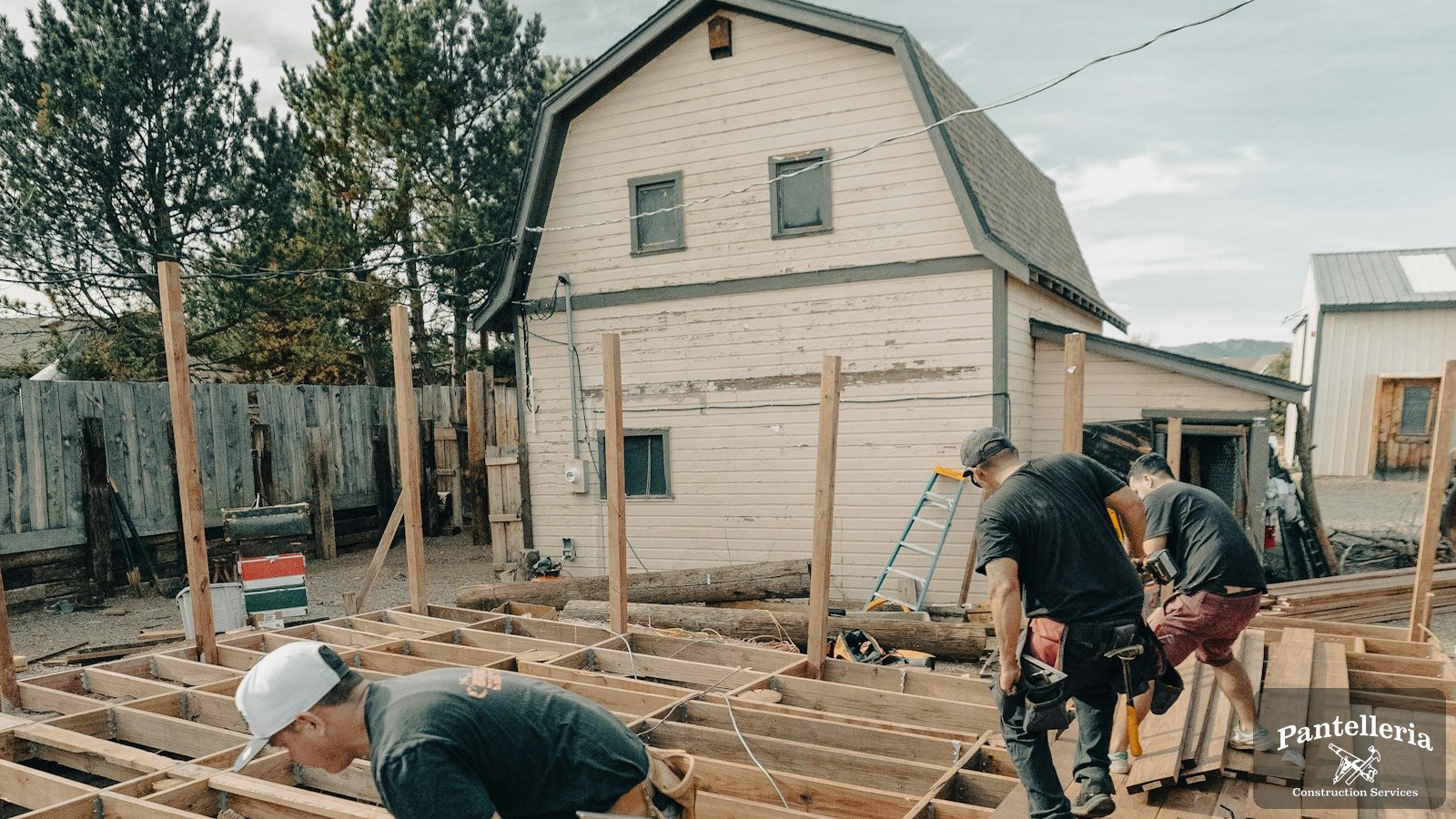
People assume frost depth requirements are a foundation issue, not a deck issue. They're wrong. Berrien County footings — for a house or a deck — need to sit below the local frost line, or the ground will heave them every winter and work the posts loose over a few freeze-thaw cycles. We dig and pour deck footings to the same frost-depth standard we use on a house foundation. It costs more up front than a surface-mounted post base, and it's the difference between a deck that's still square in year ten and one that's visibly tilting by year three.
Pressure-Treated Lumber vs. Composite: What Actually Holds Up
Pressure-treated lumber is the traditional choice for framing and decking, and it's still a sound one for the structural frame underneath — joists and beams that will be hidden from sun and standing water don't need to be anything fancier. For the decking surface itself, especially on a lake property that sees more humidity, more freeze-thaw cycling, and more bare feet, composite decking is worth the added cost. It doesn't splinter, doesn't need to be re-stained every couple of summers, and handles the swings between a humid August and a frozen January better than most wood species available locally. We'll walk you through both and give you a straight answer on which one fits your project and how you'll actually use the space — not just the cheaper number on paper.
The Ledger Board Is the Part Most Builders Rush
Almost every deck failure we get called out to inspect — not ours, someone else's — traces back to the same part: the ledger board, where the deck attaches to the house. If it isn't flashed correctly, water works its way behind the siding and into the rim joist, and you don't see the damage until it's already rotted. It's the least visible part of the entire project and the part that decides whether the deck is still solid in fifteen years. We flash every ledger connection properly and lag-bolt it to the rim joist — not nail it — because this is exactly the kind of detail that's invisible when it's done right and expensive when it's done wrong.
Permits and Setbacks Apply to Decks Too
A deck attached to your house, or even a freestanding one past a certain size, generally needs a permit through your township or Berrien County, and it has to respect the same setback lines as any other structure on the lot. This catches people off guard most often on lake lots, where the buildable area between the house and the water line can be tighter than it looks. We pull the permit and confirm the setbacks before we frame anything, so you're not the one standing at the township counter explaining an unpermitted structure after the fact.
Building for How You'll Actually Use It
A deck meant for a grill and four chairs is a different build than one meant to host extended family every summer weekend, and the framing, footing count, and layout should reflect that from the start — not get patched in later because the first version couldn't carry the load or didn't leave room for the table you actually wanted. We ask about how you'll use the space before we draw anything, because a deck that gets redesigned after it's built costs more than planning it right the first time.
Talk to Mike Before You Build
If you're planning a deck, a three-season room, or any other outdoor addition anywhere in Berrien County — Benton Harbor, St. Joseph, Stevensville, Bridgman, New Buffalo, Three Oaks, Sawyer, or Niles — Mike Pantelleria will walk the site with you and give you a straight answer on footings, materials, and what the project actually involves before anyone signs anything. Reach out for a no-obligation consultation and get one point of contact from the first conversation through the last board.

