
Well and Septic vs. Municipal Hookups: What a Rural Berrien County Lot Really Costs to Make Buildable
People fall in love with a lot before they price it out. Ten acres off a county road in Berrien County, good trees, a spot that's obviously where the house goes. Then somebody asks what it costs to make it buildable, and the conversation gets quiet.
Most of that number is water in and water out. Here's how we walk a client through it before they buy, and what changes when a lot has municipal hookups at the road versus when it doesn't.
Start with what's actually at the road
In and around Benton Harbor, St. Joseph, Stevensville and Bridgman, plenty of parcels have municipal water and sewer available at the right-of-way. Once you're out toward Coloma, Watervliet, Three Oaks, Sawyer or the rural stretches of the townships, you're often on your own for both.
A lot can also be split: water at the road, no sewer. That's common, and it means one connection and one on-site system rather than two of either.
Before you make an offer, confirm three things in writing — not from the listing:
- Is there a municipal water main in the right-of-way at your frontage, and does the utility have capacity to serve you?
- Is there sanitary sewer, and does the parcel fall inside the sewer district?
- Are there any recorded special assessments attached to the parcel for utilities already installed?
We'll make those calls with you. It takes an afternoon and it can change what a lot is worth to you by five figures.
What municipal hookups actually cost you
With water and sewer at the road, your costs are connection and tap fees, the lateral run from the main to the house, and any road-cut or restoration the municipality requires. The distance from the main to your building site is the variable people forget: a house sited 400 feet back is a very different lateral than one 60 feet off the road.
The upside is real. No well equipment, no drainfield, no reserve area eating your yard, no annual maintenance on either system, and a simpler conversation at resale. In exchange you have a monthly utility bill and less say in where the house sits, because the run from the main matters.
What a well actually involves in Southwest Michigan
A private well is a drilled casing to a producing aquifer, a submersible pump, a pressure tank, and the electrical to run it. Depth is the wild card — neighboring wells and the county's well records give a good indication, but the driller doesn't know for certain until they're in the ground, and depth drives price directly.
Two things buyers underestimate. First, the well has to be permitted and sited with required isolation distances from the septic system, the property lines and any surface water. Second, water treatment is usually not optional. Groundwater in this part of Michigan commonly carries iron, hardness and sometimes sulfur, so a softener and filtration are part of the real budget, not an upgrade you'll consider later.
A well also has to be tested for safe bacteria and nitrate levels before occupancy, and that testing is a normal part of the process, not a red flag.
What septic actually involves
On-site wastewater is where a rural lot either works or doesn't. The sequence is:
- Soil evaluation and perc test. The county health department needs to see how the soil handles water. Sandy soils generally perc well. Heavy clay, high groundwater, or a shallow restrictive layer are where problems start.
- System design and permit. The system is sized to the home — bedroom count drives it — and has to fit with setbacks from the well, the house, the property lines, and any wetland or surface water.
- Installation. Tank, distribution, and drainfield, plus a designated reserve area for a future replacement field. That reserve is required, and it's real square footage you can't build on, pave, or park on.
If the soils or the water table don't support a conventional gravity system, you're looking at an engineered or mounded system. Those work, they're permitted regularly, and they cost meaningfully more — plus a mound changes the finished grade and the look of your yard, which is worth knowing before you're standing in front of it.
This is the single most common reason a rural lot doesn't work for the house someone wants. The parcel is fine. The buildable envelope, once you subtract the drainfield, the reserve area and every required setback, just isn't big enough for a 3,000-square-foot footprint with a walkout.
The other costs that ride along with a rural lot
Water and waste are the big two, but they aren't the only things standing between a raw parcel and a foundation:
- Driveway and access. A long drive means base material, culverts where you cross a ditch, and grading. A drive that trucks can't use in March is a schedule problem for the whole build.
- Electric service. Distance from the nearest pole drives the cost, and running it underground costs more than overhead.
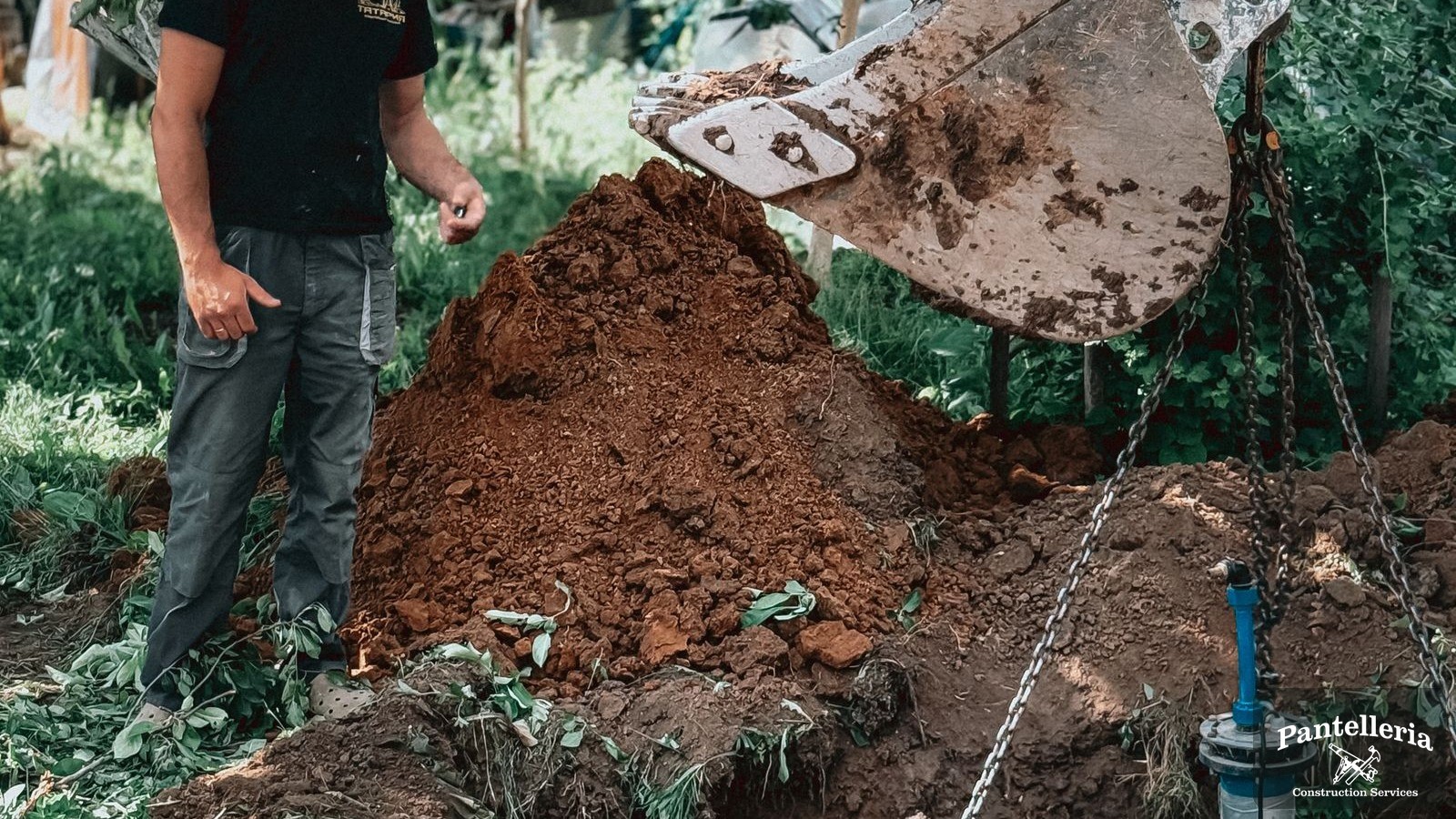
- Clearing and grading. Trees where the house goes, stumps out, spoil placed somewhere sensible, and a pad that drains away from the foundation.
- Site drainage. Michigan freeze-thaw plus a poorly graded site is how basements get wet in year three.
How we handle it
Pantelleria Construction has been building in Berrien County for over 20 years, and we handle permitting for the county and the townships as part of the job — you don't sit at the counter. When a client brings us a lot they're considering, we look at it before they close: what's at the road, what the soils are likely to do, where the house can actually sit once the septic and its reserve are placed, and what the drive and utilities will run.
We estimate twice before ground breaks, and site costs are one of the biggest reasons an early number moves. Getting them on the table before you own the property is how you avoid finding out later.
If you're looking at a lot in Berrien County or anywhere in Southwest Michigan, walk it with us before you sign. Call Mike at (269) 876-1381 or reach out through pantelleriaconstruction.com.

